Our research aims to understand how species evolve, adapt to their environments, and how we can use this knowledge for their conservation using genomics as our tool.
These questions include (1) how we can use genomic data to reconstruct the evolutionary histories of species, (2) how anthropogenic change alters the evolutionary trajectories of species and (3) the molecular basis of complex and adaptive traits. We primarily use mammals, especially wild and domestic canids, as a system to address these questions.
Evolutionary Genomics and Hybridization
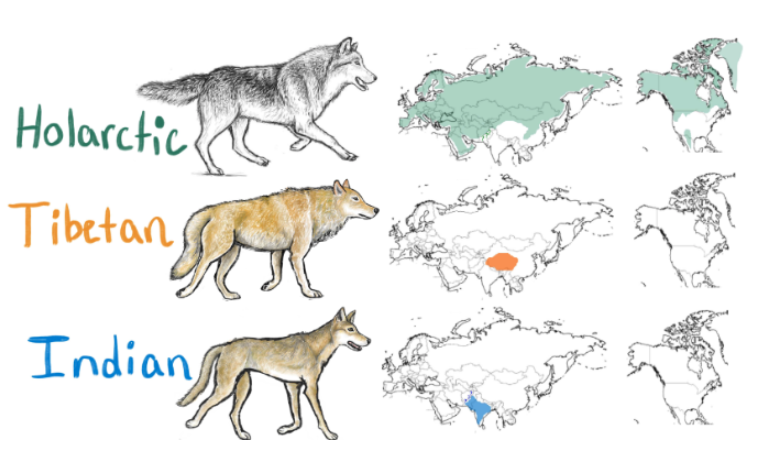
A major focus of the lab is to understand the evolutionary histories of the animals we study. We are especially interested in studying the evolutionary consequences of hybridization between species. We use from modern, museum specimens, and ancient genomes to peer into the past and help us resolve complex evolutionary histories.
We have active projects on dogs and grey wolves, African wolves, golden jackals, black-backed jackals, coyotes, dholes, and more!

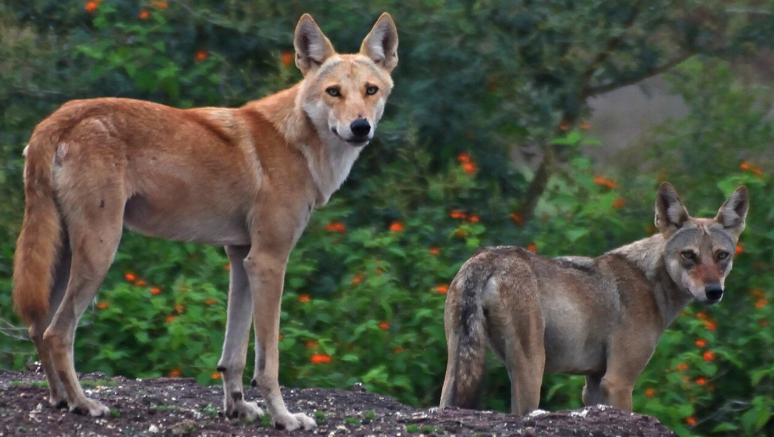
Impacts of anthropogenic change on wildlife
Understanding how human activities alter the evolutionary trajectories of species raises interesting evolutionary questions and has direct relevant to conservation. Patterns of genetic variation within and among populations can provide information on population declines, inbreeding, and genetic connectivity.
We have multiple projects focused on threatened and endangered taxa that investigate how anthropogenic change has shaped their evolutionary trajectories and genetic diversity. From insights gained from using genomic data to address scientific questions, we aim to better understand species’ responses to environmental change and inform conservation efforts.
Describing biodiversity and translating to conservation policy
While we use study systems that are already well known and have abundant resources to answer broad evolutionary questions, our lab is also interested in generating new knowledge on understudied species. The vast majority of species have not been sequenced or taxonomically evaluated while facing pressing threats of extinction.
We collaborate with many international partners in Pakistan, India, Sri Lanka, and others to generate new knowledge on under-studied species to study their evolutionary histories and inform conservation efforts. We particularly aim to collaborate and help train students and researchers in genomics tools to help expand expertise of genomic research to study biodiversity in these regions.
 Hennelly Lab